Shelf dividers and pushers: facing without the labour
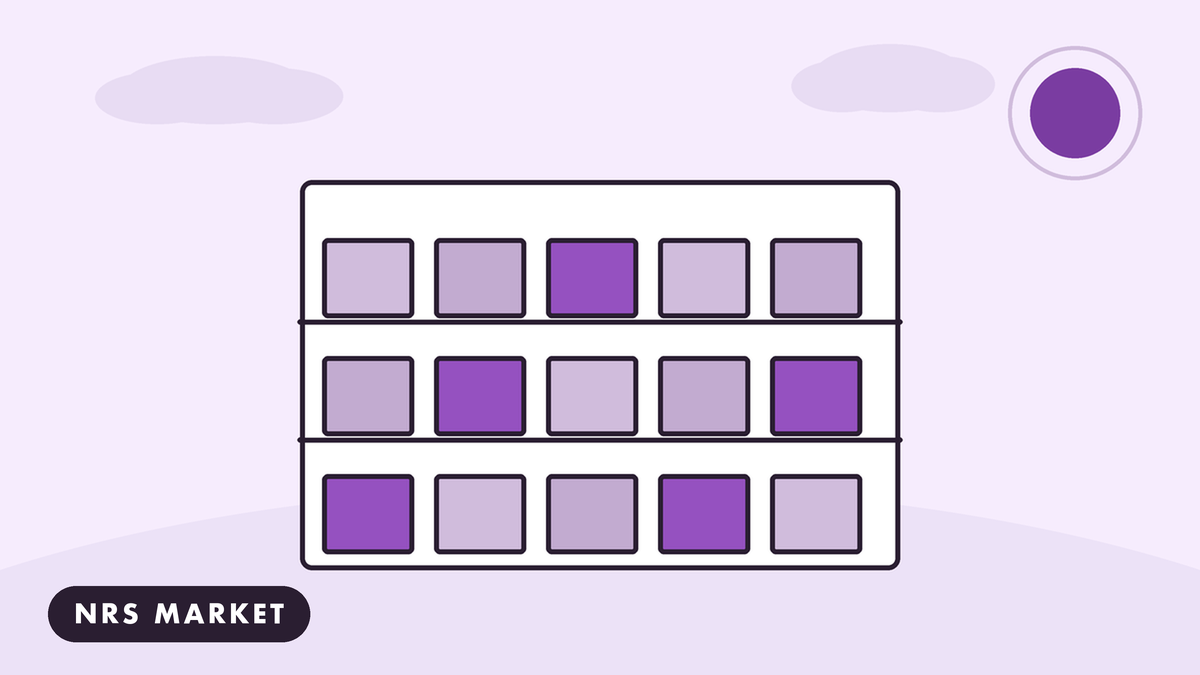
A faced shelf — products pulled forward, aligned, fronts visible — sells better and looks better than one with gaps behind the front row. Keeping shelves faced by hand is a job somebody has to do several times a day. Dividers and pushers are the hardware that does most of it automatically.
For a store with limited staff hours, that is the whole argument.
What is the difference between them?
Dividers are vertical fins that separate product lanes and stop items falling sideways. Pushers add a spring-loaded tray that moves the next unit forward as one is taken. Dividers organise; pushers face.
Many systems combine the two, which is usually what a store actually wants — lanes that hold their shape and product that comes forward on its own.
Which categories benefit most?
Small, fast-moving, uniform items in deep shelves. Cans, bottles, packets, batteries, tobacco, cosmetics. Anything where a shelf goes from full to gap-toothed within a few hours of a busy day.
They do not suit irregular items, very light packaging that a spring will crush, or slow sellers where the facing never degrades anyway. Buying a pusher system for a slow category is buying a solution to a problem that does not occur.
Check the shape as well as the speed. Tapered bottles, soft packs and anything that leans will not track down a lane cleanly, and a pusher that jams is worse than no pusher at all.
What do they cost in shelf space?
Real space, and this is the trade-off nobody mentions in the sales material. Dividers take width, pushers take depth for the mechanism, and both reduce the units a shelf holds.
For a fast seller, faced product and fewer units is usually the better outcome, because a faced shelf sells more per unit held. For a category where the shelf is already tight and turnover is slow, the lost capacity is a genuine cost.
What about tobacco and regulated fixtures?
Pusher fixtures are standard in that category for good reason: the products are uniform, the value per facing is high, and the counter fixture is usually out of customer reach so nothing gets faced by a shopper's hand.
If your store carries those categories, that fixture is often the single best investment in the store and it comes with the discipline the category requires anyway.
How do you size them?
By the product, not by the shelf. Measure the width of the item you intend to lane, allow clearance, and count how many lanes the shelf will take. Buying before measuring is the standard way to end up with dividers that do not fit your actual packaging.
Remember that packaging changes. A divider set sized precisely to a current pack will need adjusting when the supplier changes the box, which argues for adjustable systems over fixed ones.
What do they change about restocking?
They make it faster and more honest. Loading a lane from the back means the oldest stock stays at the front, which is stock rotation enforced by the fixture rather than by whoever is filling shelves at seven in the morning.
That is a real benefit in any category with a date on it, and it is the argument that usually convinces a sceptical owner faster than the facing one does.
What is the cheap version?
Dividers alone, on the two or three categories that degrade fastest. They cost a fraction of a pusher system, take ten minutes to fit, and solve the sideways-collapse problem that accounts for most of the untidiness.
Start there, measure whether the shelf stays faced, and buy pushers only for the lanes where dividers alone do not hold. Both sit in the wider store supplies range.
Frequently asked questions
Do pushers damage light packaging?
They can. Spring tension suited to a can will crush a crisp packet, and adjustable-tension systems exist for exactly this. Test with your actual product before fitting a whole section.
Will they fit any shelf?
Most systems fit standard gondola and wire shelving, with mounting that varies. Check what your fixtures are before ordering, because the mounting is where compatibility fails rather than the tray.
Do I still need to face shelves by hand?
Less often, not never. Customers move things, and a shelf still needs a walk-through. The gain is going from several passes a day to one.
Are they worth it for a very small store?
On the two or three worst categories, usually yes, because the labour saved is the owner's own time. Across the whole store, rarely.
How do they affect a planogram?
They make one enforceable, which is the point. A lane is a physical constraint, and a shelf with lanes stays in the arrangement you set rather than drifting over a month.
Can they be moved when the layout changes?
Adjustable systems can; fixed ones often cannot without damage. If you reset sections seasonally, that is a strong argument for the adjustable version.
Do they help with counting stock?
Indirectly, and usefully. Uniform lanes make a visual count possible from the aisle, which is how a quick shelf check becomes a thirty-second job instead of a five-minute one.
What is the best category to start with?
Whichever shelf looks worst by mid-afternoon. That is the one where facing labour is being spent daily, and it is where the fixture pays back fastest and most visibly.
Stocking your store? Start at nrsmarket.com or browse store supplies.